Memory games for elementary ESL learners
Practical ESL memory games for elementary learners using pictures, movement, matching, short language frames, and manageable classroom teams.
Memory games can create repeated attention to language without feeling like repeated drilling. For elementary learners, the key is a small amount of content, short turns, and a speaking rule they can perform successfully.
Use clear pictures, model the routine once, and keep the first round easier than you think it needs to be.
See it in PeraPera Play
Memory Match
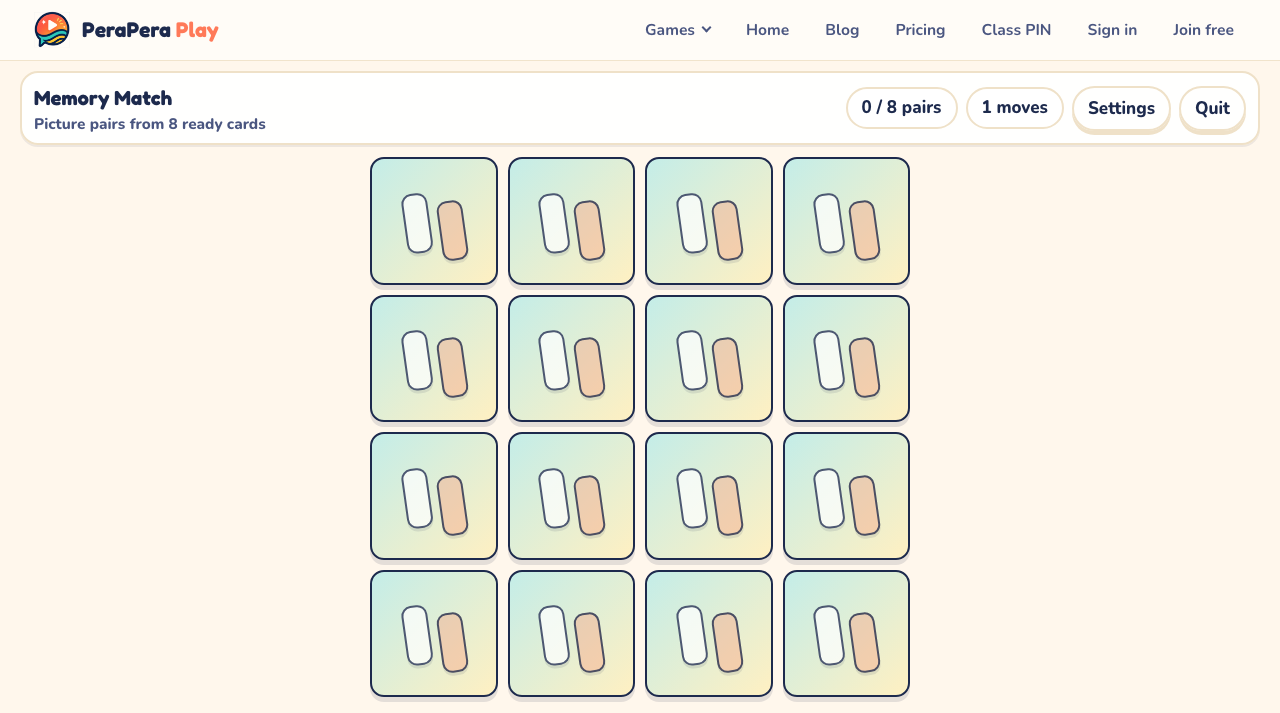
Use picture-picture or picture-language pairs and a board size that fits the class.
Touch / Catch
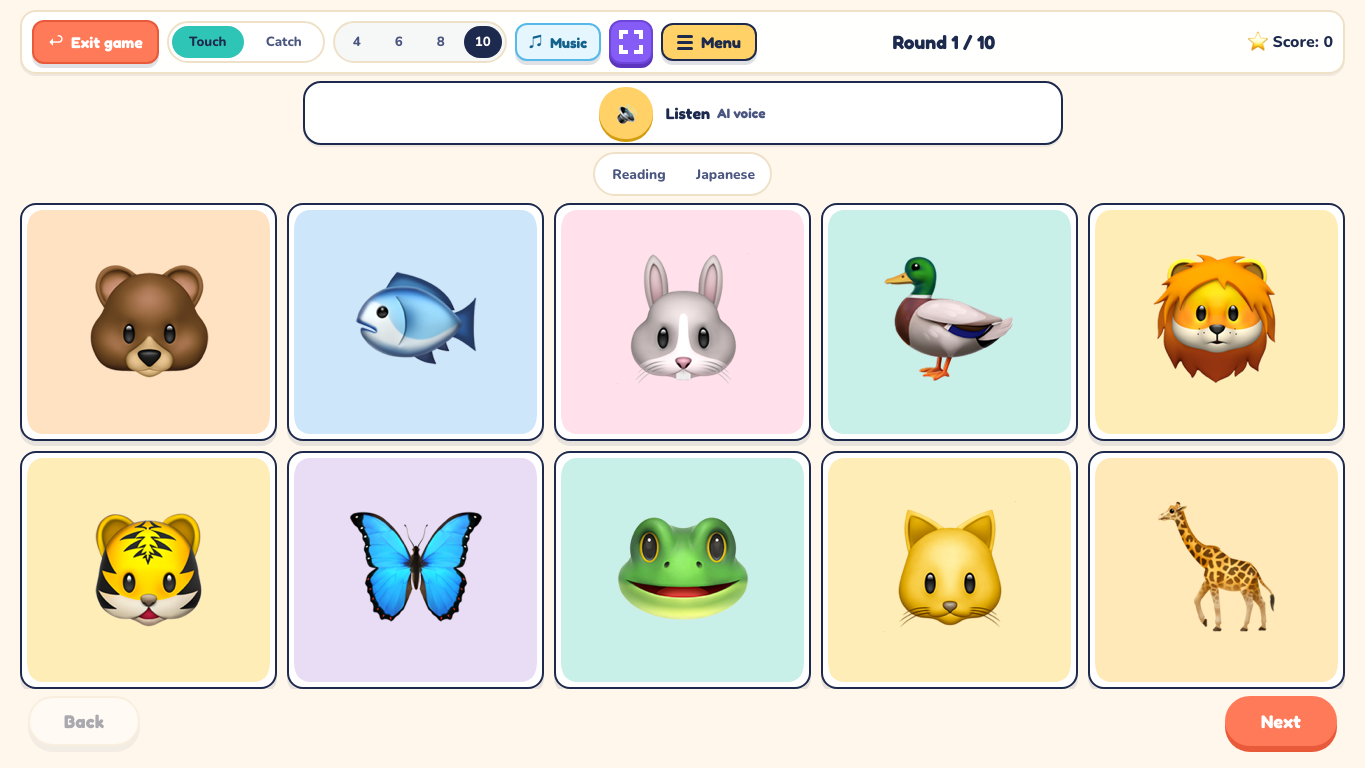
Strengthen listening memory by matching a spoken word to one of several pictures.
Quiz
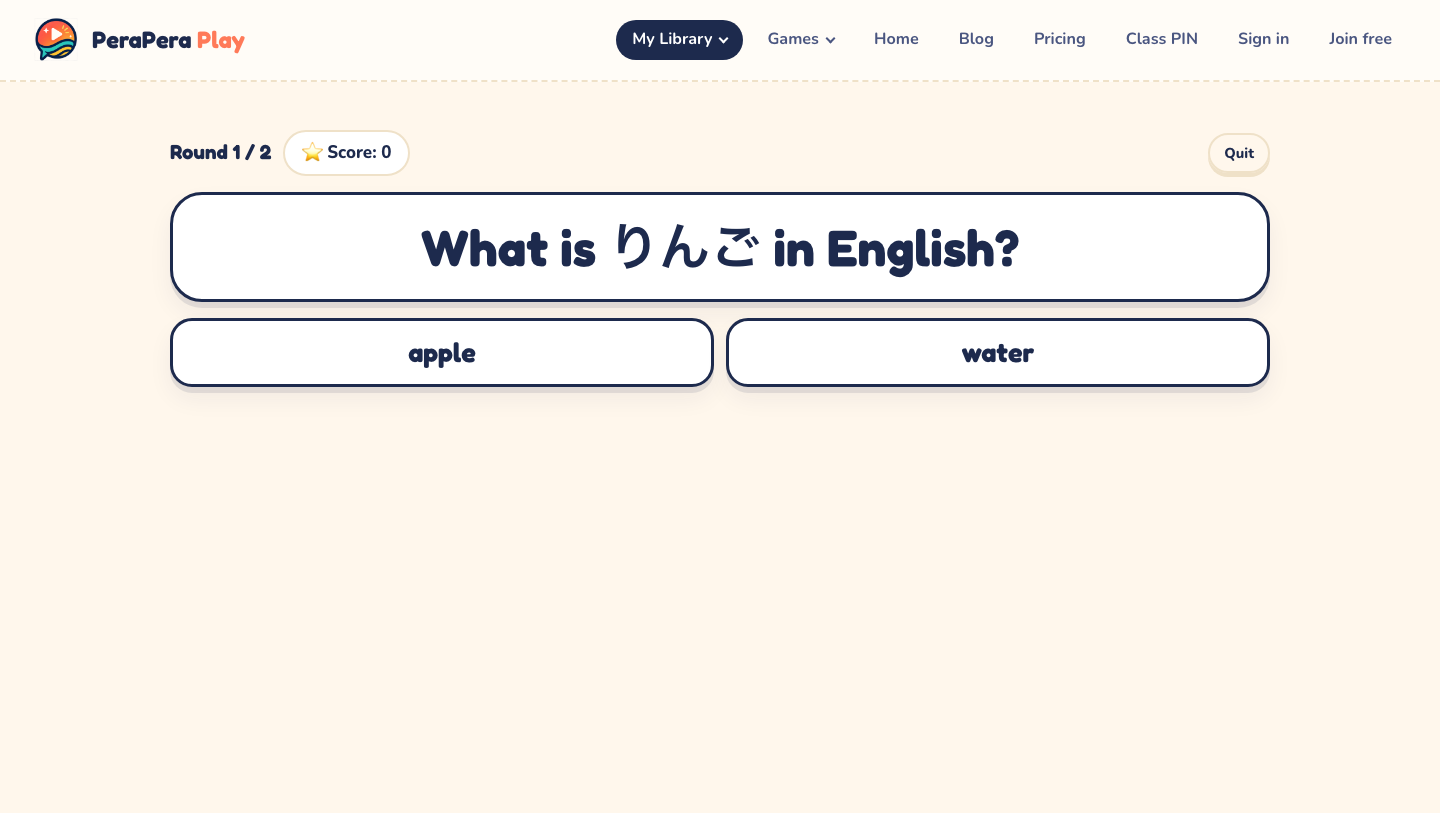
Switch the prompt direction to retrieve a word from its image, meaning, or translation.
Picture Reveal
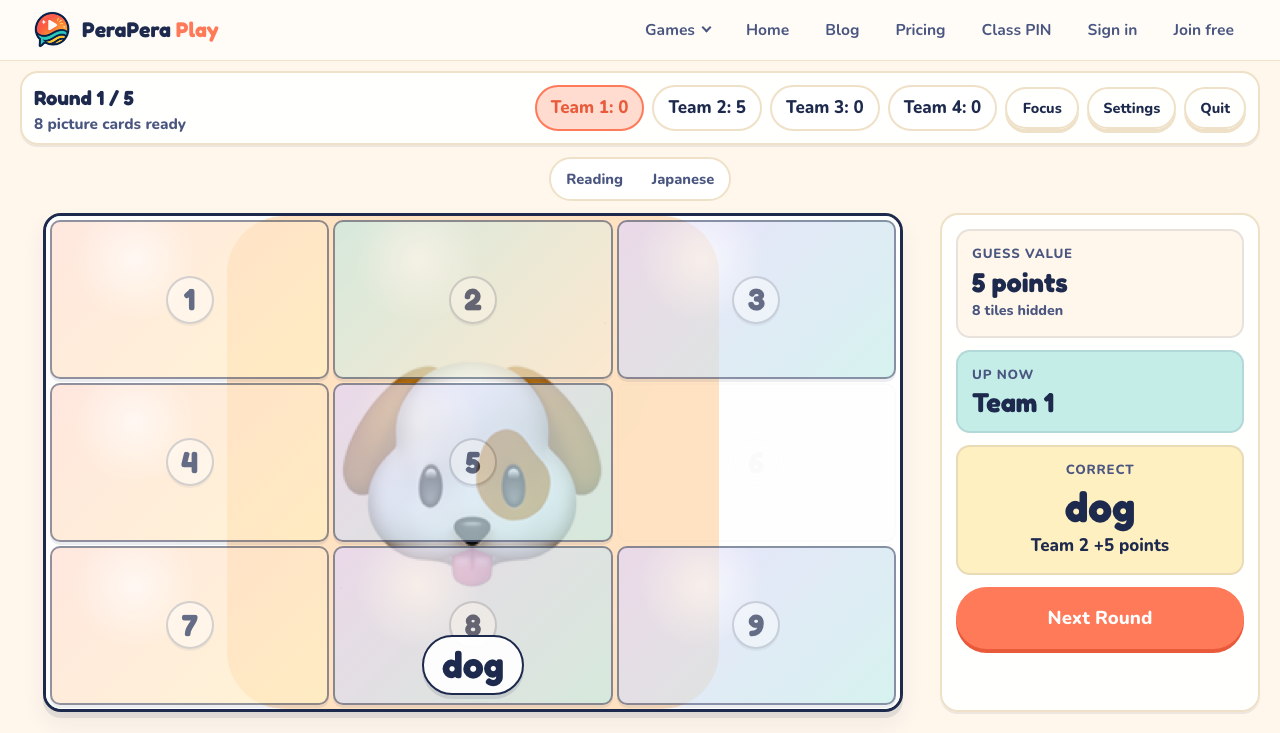
Ask learners to hold an image in mind as small clues appear across the grid.
Start with Memory Match
Choose a small board and pair pictures with words, translations, or definitions. When a student reveals a card, the class says it together. A team keeps a pair only after saying both items correctly.
Add listening with Touch / Catch
Show four or six picture choices, play the audio, and give everyone thinking time before a student touches the answer. Use Catch mode when you want moving targets and more energy.
Reverse the prompt in Quiz
Use the same Play Set but change the prompt type. Show a translation, definition, image, or play audio so learners retrieve the target from a different clue.
Hold the picture in mind with Picture Reveal
Reveal only one tile, pause, and let pairs compare predictions. Require the word or a short sentence before the next clue appears.
Make teams supportive
Allow a few seconds of pair rehearsal before an official response and rotate the speaker. Reward careful language and helpful checking, not only the fastest memory.
Common questions
How many cards should young learners remember?
Begin with four to eight visible items or four matching pairs. Increase the number only after students understand the routine and can use the target words.
Should students be eliminated after a mistake?
No. Keep everyone involved through pair rehearsal, team checking, and repeated rounds. A mistake should create another retrieval opportunity.